Ring riding (ringrijden) is one of the finest and most colourful traditions of Walcheren. Every summer, one village after another turns into an arena where riders on lavishly decorated horses attempt to spear a small ring onto their lance at full gallop. An exciting spectacle for young and old, with centuries of history and an exuberant village atmosphere.
What is ring riding?
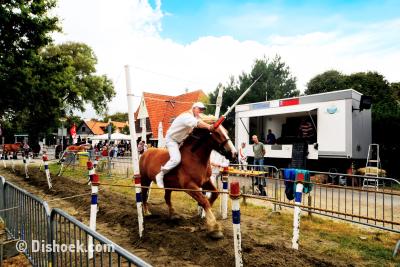
The game in brief: a rider on a galloping horse crosses a short track and tries to lift a small ring from a holder using a lance, a kind of wooden spear ending in an iron tip.
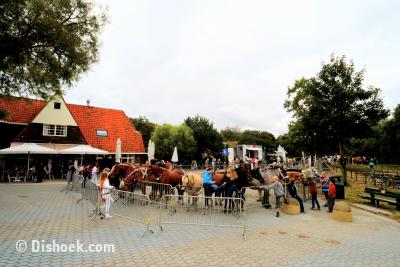
The proud horses: beautifully groomed draught horses are used for this, usually genuine 'Belgians'. For the occasion the mane is plaited and the docked little tail is decorated with colourful ribbons and a sprig of greenery.
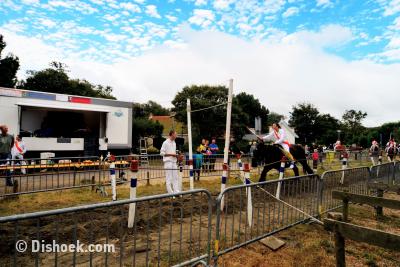
A great atmosphere: villagers and tourists crowd along the barriers to watch the spectacle from as close as possible, often with a drink in hand and music in the background.
A related tradition: alongside classic ring riding there is also sjezenrijden, in which the ring is speared from a two-wheeled carriage. The driver handles the horse and the ring spearer takes the ring, both dressed in traditional Walcheren costume.
Recognised heritage: since 2025 both ring riding and sjezenrijden have been included in the Inventaris Immaterieel Erfgoed Nederland (the Dutch inventory of intangible heritage), as a living Zeeland tradition passed down from generation to generation.
A centuries-old tradition on Walcheren
Roots in the age of knights: ring riding is seen as a relic of medieval jousting tournaments and tilting contests. Where noblemen once tried to unseat one another while the common folk looked on, today the target is a harmless little ring.
Centuries of popular entertainment: as early as the 17th century there was ring riding, feasting and drinking in the villages of Walcheren and Zuid-Beveland. The oldest written sources date from that period, although the origins probably reach back even further.
Survived despite opposition: the church looked on the boisterous festivities with disapproval and tried to ban the game. Even so, the tradition endured, thanks in part to the support of local notables and the warm interest of the Royal House, which from the 18th century onwards donated prizes that are still awarded today.
From farmers' sport to association: for a long time it was mainly the farming community that kept the sport alive. Even now that fieldwork is done by tractors, many families are still happy to keep their sturdy Belgian horses for this day.
Very much alive: since the founding of the Zeeuwse Ringrijders Vereniging in 1950, ring riding has grown into a well-organised sport, sustained by dozens of village associations and volunteers. In 2025 the association celebrated its 75th anniversary.
How the game works
The track: according to the rules the track is 36 metres long, marked out with poles standing 1 metre apart at the bottom and 1.65 metres apart at the top, connected on both sides by ropes.
The ring and the holder: halfway along, a sliding holder hangs beneath a gateway at a height of 2.20 metres. A ring of just 38 millimetres in diameter is set into it with a spring. Each competitor decides where the holder is placed, depending on whether they are left- or right-handed.
The attempt: the aim is to lift the ring from the holder with the lance while the horse is galloping. If the ring is speared but lost again before the end of the track, it counts as a miss.
Extra chances: if the horse drops from a gallop into a trot, the rider may ride the run again, provided the lance was kept drawn back in time. If it fails once more, it is the next competitor's turn.
The winner: whoever spears the most rings over the course of the day wins the tournament.
Fancy watching it yourself?
Ring riding is a real summer spectacle that you can enjoy up close for free, somewhere between late spring and the end of summer, spread across the villages of Walcheren. Each village has its own competition day, so with a little planning you can easily take in several of them during your holiday. See the competition dates by village: